To complete today's challenge, find time to prayerfully read through the reflections below, attend a recovery meeting, and share what's on your heart and mind on today's discussion board.
REFLECT
Good evening, Friend
October 25
Daily Reflection
Saint of the Day
Daily Reflection
Thirtieth Sunday in Ordinary Time
Saint of the Day
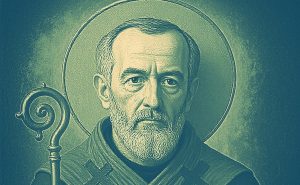
Saints Crispan and Crispinian, Martyrs
Thirtieth Sunday in Ordinary Time
One of the clearest signs that recovery is changing us appears in our relationships. We begin noticing how our choices affect other people. An apology becomes easier to offer. We become less interested in defending ourselves and more willing to repair what we have damaged. The freedom we receive slowly makes us more capable of love.
In Sunday’s gospel, a scholar of the law asks Jesus which commandment is greatest (Matthew 22:34–40). Jesus answers, “You shall love the Lord, your God, with all your heart, with all your soul, and with all your mind.” Then He adds, “You shall love your neighbor as yourself.” Everything else, He says, depends on these two commandments.
Recovery helps put these loves back in the right order. Addiction narrows life around what we want or believe we need in the moment. Saint Paul describes the opposite movement in the second reading when he praises the Thessalonians because they “turned to God from idols to serve the living and true God” (1 Thessalonians 1:9). Recovery asks for that same turning. What once demanded our attention begins to lose its place, and we become more available to God and to the people around us.
Steps Eight and Nine give this change a concrete form. Step Eight is sometimes reduced to making a list of people we have harmed, but the deeper work is becoming willing to see those people differently. We bring them to prayer. We ask God to soften what has become hardened in us and to help us recognize them again as our neighbor. Some may have harmed us too. That does not erase what happened or require us to ignore necessary boundaries. It does ask us to become willing to release the version of them that exists only inside our resentment.
That conversion of heart prepares us for Step Nine. Amends are more than a way to relieve guilt or clean up the past. They are an expression of love and responsibility. We acknowledge the harm we caused without demanding forgiveness or controlling how the other person responds. Where direct amends would cause further injury, wisdom and guidance help us find another way to practice honesty and repair.
The first reading reminds us that love is not sentimental. God commands Israel not to mistreat the stranger or take advantage of the vulnerable (Exodus 22:20–26). Love becomes visible in the way we treat people, especially when there is nothing to gain from doing so. Recovery gradually moves us from self-protection toward greater concern for others.
Step Ten keeps the work current by asking us to continue taking personal inventory and promptly admit when we are wrong. Instead of allowing resentment or dishonesty to accumulate, we become quicker to return to the truth. Over time, this practice helps love become less dependent on mood and more rooted in character.
Jesus does not separate love of God from love of neighbor, and He does not ask us to love our neighbor while despising ourselves. Recovery teaches us to take responsibility without making shame our identity. As we receive God’s mercy more deeply, we become more capable of extending mercy without abandoning truth.
The goal of recovery is larger than stopping an addictive behavior. God is restoring our capacity to love. We turn away from what once claimed our loyalty and become more available to Him. We begin repairing what we can and allowing prayer to change the way we see the people connected to our past. Over time, the commandments Jesus gives in Sunday’s gospel become less like ideals we admire and more like a way of life we are learning to practice.
Reflection Questions
Who is difficult for you to see as your neighbor right now, especially when resentment or past harm is involved?
How has working Steps Eight, Nine, or Ten changed the way you relate to God, yourself, or other people?
What has helped soften your heart toward someone you have harmed or someone with whom the relationship has been complicated?
Sunday Mass Readings
First Reading: Exodus 22:20-26 Responsorial Psalm: Psalm 18:2-3, 3-4, 47, 51 Second Reading: 1 Thessalonians 1:5c-10 Gospel: Matthew 22:34-40
(d.c.286) — Twin brothers and members of the Roman nobility, Crispan and Crispinian, fled persecution to Gaul (modern-day France), where they evangelized by day and made shoes by night to support themselves. They made many converts, were arrested under Emperor Diocletian, and were tortured and beheaded in Rome.
The memorial of these twin martyrs is famously referenced in a speech by King Henry in William Shakespeare’s Henry V, Act IV, Scene iii, to the far-outnumbered Englishmen about to battle the French. The phrase “band of brothers” became a popular reference. Who are your “band of brothers” in recovery?
“From the example of the saints it appears how foolish the pretenses of many Christians are, who imagine the care of a family, the business of a farm or a shop, the attention which they are obliged to give to their worldly profession, are impediments which excuse them from aiming at perfection…How many saints have made these very employments the means of their perfection! Saint Paul made tents; Saints Crispin and Crispinian were shoemakers; the Blessed Virgin was taken up in the care of her poor cottage; Christ himself worked with his reputed father” (Father Alban Butler).
Reflection by Brad Farmer
Other Saints
Saint Anthony Claret, Bishop
October 24, 2025
Saint John of Capistrano, Priest
October 23, 2025
Saint John Paul II, Pope
October 22, 2025
Saint Laura of Saint Catherine of Siena
October 21, 2025
Saint Maria Bertilla Boscardin
October 20, 2025
Saint Paul of the Cross, Priest
October 19, 2025
Saint Luke, Evangelist
October 18, 2025
Saint Ignatius of Antioch, Bishop and Martyr
October 17, 2025
Saint Margaret Mary Alocoque
October 16, 2025
Discuss
Share your thoughts and connect with others on this journey.
Lately, I've been experiencing a lot of temptations. Fortunately, by the grace of God, I have not succumbed to them. Normally, however, when I have these temptations, I start feeling shame and distress, even though I’ve successfully stopped them. But this week, I really started to feel God talking to me, letting me know he sees my struggles and my distress and doesn’t fault me for them—that he understands that we, as humans deal with complex issues and that he wants us to know He loves us very much and wants us to feel his grace, mercy, and forgiveness.
2
Looking for support?Connect with others who understand your journey.


 REFLECT