To complete today's challenge, find time to prayerfully read through the reflections below, attend a recovery meeting, and share what's on your heart and mind on today's discussion board.
REFLECT
Good morning, Friend
July 28
Daily Reflection
Saint of the Day
Daily Reflection
Tuesday of the Seventeenth Week in Ordinary Time
Saint of the Day
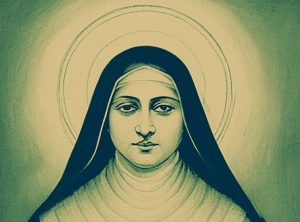
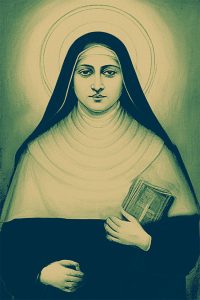
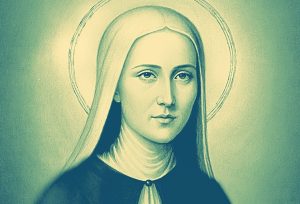
Saint Alphonsa of the Immaculate Conception
Tuesday of the Seventeenth Week in Ordinary Time
“Remember not against us the iniquities of the past; may your compassion quickly come to us, for we are brought very low” (Psalm 79:8).
It is good and in fact essential that we learn how to move on from our pasts in recovery. Reliving the past, wallowing in our self-pity, and choosing to stew in the cesspool of our resentments are all manifestations of pride that inhibit true healing of the heart and render recovery from addiction a non-starter or guarantee relapse. Through recovery fellowship and the Twelve Steps, we come face-to-face with the ramifications of our past—in the ways we have both been hurt and hurt others. By means of radical honesty, humility, contrition, and forgiveness (both for self and others), and above all in communion with the Lord in prayer and sacramental grace, we come to transcend our personal histories as Christ transforms our painful pasts into the joyful present “so that [we] may be reasonably happy in this life and supremely happy with Him in the next.” As Saint Paul proclaimed, “You were taught to cast aside the old self of your former way of life that had been corrupted by its captivating desires. You are to be renewed in the spirit of your minds, and to clothe yourselves with the new self created in God’s image, in the way of uprightness and holiness that belong to the truth” (Ephesian 4:22-24). Indeed! These are no small words! In recovery, we have been given the precious gifts of mercy, sanity, sobriety, serenity, and community, and we should be absolutely prepared to sacrifice anything and everything that threatens to take those priceless gifts away from us!
Letting go of our past is a significant and necessary step for a fruitful and sustained recovery, but it does not mean we forget our past altogether. Rather, it is helpful to keep alive in our memory who we have been in addiction so that we do not regress in putting on again the “old self”! The founder of Catholic in Recovery often tells the impactful story of his first sponsor holding up a Bible and saying, “this book is for people who don’t want to go to Hell,” and then holding up the Big Book of Alcoholics Anonymous and saying, “this one is for people who have been there and have no interest in going back!” Remembering our personal histories of active addiction and sharing them through our collective testimonials can serve as powerful motivation for persevering through temptation and adversity, as well as become a shared reservoir of learned wisdom as we celebrate with one another our experience, strength, and hope in Christ Jesus.
A sustained and vibrant recovery requires that we not only know our past but that we live daily with a healthy awareness that our powerlessness is always a reality—that we are just a drink, drug, screen, or any trigger away from reverting to the “old self.” Knowing the sick person we were in active addiction helps us to be and remain the healthy person we are in recovery today. Remembering our past reinvigorates our ever-present need for a savior. Let us never forget who we were so that we may become the saints He wills us to be!
Reflection Questions
How have you learned to let go of your past but not forget it? What was your relationship with God in the past and in the midst of life in active addiction? How has that relationship changed in recovery?
How has hearing other recovering addicts’ stories of their pasts and present life in recovery impacted your own conversion experience? How has your story done the same for others?
Daily Mass Readings
First Reading: Jeremiah 14:17-22 Responsorial Psalm: Psalm 79:8, 9, 11 and 13 Gospel: Matthew 13:36-43
(1910-1946) — Anna Muttathupadathu took the name Alphonsa as a Poor Clare nun and was the first saint from India to be canonized. “She experienced not only physical pain of great intensity, but also the spiritual suffering of being misunderstood and misjudged by others. But she constantly accepted all her sufferings with serenity and trust in God, being firmly convinced that they would purify her motives, help her to overcome all selfishness, and unite her more closely with her beloved divine Spouse” (Pope Saint John Paul II, beatification homily on February 8, 1986).
Suffering can be united to the Cross and transformed into prayer. Hundreds of miraculous cures are attributed to the intercession of Saint Alphonsa, most commonly involving straightening of deformed feet. Every day, we need to be reminded of three small steps despite our spiritual deformities. God can do what we are powerless to, so let Him (Steps 1-3).
“I feel that the Lord has destined me to be an oblation, a sacrifice of suffering…I consider a day in which I have not suffered as a day lost to me” (Saint Alphonsa).
Reflection by Brad Farmer
Other Saints
Saint Panteleon, Martyr
July 27, 2025
Saints Joachim and Anne
July 26, 2025
Saint James (the Greater), Apostle
July 25, 2025
Saint Charbel Makhlouf, Priest
July 24, 2025
Saint Bridget of Sweden
July 23, 2025
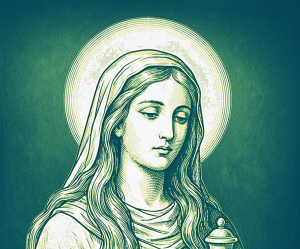
Saint Mary Magdalene
July 22, 2025
Saint Lawrence of Brindisi, Doctor of the Church
July 21, 2025
Saint Apollinaris, Bishop and Martyr
July 20, 2025
Saint Symmachus, Pope
July 19, 2025
Discuss
Share your thoughts and connect with others on this journey.
Once God delivered me from my horrible addiction, it wasn’t long after that my sight was restored— I started seeing sin everywhere in the things I was doing in my addictive past, especially with things I was doing that I never even thought were wrong. I am so thankful for Christ restoring my sight!
MARYANNE Hanger4 months ago
The daily actions that help me continue walking as a child of light rather than returning to darkness are my daily morning prayer routine which is about an hour and includes a variety prayer, daily Mass reading, morning Liturgy of the Hours, and two Hallow meditations; going to daily mass, adoration several times a week, and service to others in a variety of form. My daily prayer routine has been critical to keeping me in the light. as a periodic binge drinker starting to skip morning prayer was a sure sign I was headed to darkness.
Looking for support?Connect with others who understand your journey.

 REFLECT