

Login

Monday, March 2nd

The Lenten Recovery Challenge

Module 13 of 47

Monday, March 2nd

To complete today's challenge, find time to prayerfully read through the reflections below, attend a recovery meeting, and share what's on your heart and mind on today's discussion board.

REFLECT

After reading today's reflections, make sure to listen to Ruth F.'s personal reflection.

Good evening, Friend
June 26
Daily Reflection
Saint of the Day
Daily Reflection
Friday of the Twelfth Week in Ordinary Time
Saint of the Day
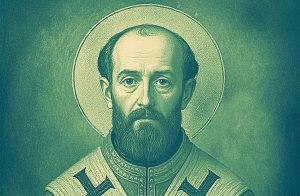
Saint Josemaría Escrivá de Balaguer

Friday of the Twelfth Week in Ordinary Time

Today’s Gospel reading has always been a source of identification and hope for me. I have felt like the leper on so many levels in my disease of addiction. Under the old law, lepers were isolated from the community. They could not interact with others, were denied access to the temple for worship, and were confined to camps. If anyone came near one they were obliged to call out “unclean,” and touching a leper would render a person unclean and ritually defiled. Yet, as we see today, Jesus is not defiled as He touches and heals the man.

Instead of staying away from the crowds and Jesus, the leper boldly approaches Jesus and asks to be healed. The leper exhibits amazing faith and courage. In my active disease, I identified with the leper coming to Jesus, first out of desperate hopelessness and into powerlessness (Step 1), and then by saying, “Do for me what I cannot do for myself” (Step 2). I became willing, telling the Lord, “I am entirely ready to have you heal me, change me. I am yours, I belong to you, I give you my will and my life now (Step 3); take away all that is objectionable to me and offensive to you (Step 6); I Humbly ask you to remove all that makes me ‘unclean,’ isolated, alone, defective, unfree, and shameful.”

Jesus could have healed the leper from afar, yet He chooses to come close and touch the man and then commands him to show himself to the priest and offer the gift that Moses prescribed. This is similar to what we’re called to do in recovery. We are invited to seek and show ourselves to God, self, and another human being in Step Four and Step Five, becoming transparent, vulnerable, and receptive to God’s healing grace and power. And in response to this healing, we are called to then offer our lives and hearts to God and others by living sober, clean, and free.

The leper gives us an example of how to reverently approach Jesus in humility, honesty, and dependence. And he also gives us an example of how we should encounter the Real Presence of Jesus in the Eucharist, whispering quietly each time, “Lord, if you wish, you can make me clean” (Matthew 8:2).


Reflection Questions

  • How have you approached Jesus for help and in what specific ways have you experienced the healing touch of Jesus from active addiction, compulsions, and unhealthy attachments?
  • In what specific ways do you respond to God in gratitude for the gift of life, healing, and recovery? Can you respond to Jesus in the Eucharist with gratitude today?


Daily Mass Readings

First Reading: 2 Kings 25:1-12
Responsorial Psalm: Psalm 137:1-2, 3, 4-5, 6
Gospel: Matthew 8:1-4

Reflection by Marybeth B.

View Full Reflections Calendar

Saint Josemaría Escrivá de Balaguer

Audio Reflection

(1902-1975) — Saint Josemaría was a Spanish priest who founded Opus Dei in 1928, a Catholic institution of laypeople and priests that focuses on the universal call to holiness and sanctification of ordinary daily work. He experienced hardships and poverty in family life and religious persecution during the Spanish Civil War. Saint Josemaría Escrivá dedicated his life to the building of God’s Kingdom through the apostolate of Opus Dei.

Pope Saint John Paul II summed up Saint Josemaría’s message at the canonization Mass on October 6, 2002: “Work and any other activity, carried out with the help of grace, is converted into a means of daily sanctification.” Take some time to reflect on how addiction and recovery have each affected your work. How have they affected your sanctification?

“Abandonment to the will of God is the secret of happiness on earth. Say, then: meus cibus est, ut faciam voluntatem ejus, my food is to do his will” (Saint Josemaria Escriva, The Way).

Other Saints

Saint William of Vercelli
June 25, 2025
Nativity of Saint John the Baptist
June 24, 2025
Saint Joseph Cafasso
June 23, 2025
Saint John Fisher, Bishop and Martyr and Saint Thomas More, Martyr
June 22, 2025
Saint Aloysius Gonzaga
June 21, 2025
Blessed Margareta Ebner
June 20, 2025
Venerable Matt Talbot
June 19, 2025
Blessed Osanna Andreasi
June 18, 2025
Saint Hervé
Saint Hervé
June 17, 2025

If the audio player above isn't loading, tap here to listen →

Discuss

Share your thoughts and connect with others on this journey.

Ruth shares today how her recovery opened her up to God's forgiveness and mercy in a way she hadn't known when living with her addictions. Have you experienced the same? How so?

Joe Camacho 4 months ago
Yes, I have experienced Gods mercy and forgiveness since beginning recovery, I have gone to mass and cried to the Lord telling him my sins, crying to him, these since I told the Lord I have already been forgiven I just needed to let them go. Accepting Gods forgiveness is hard for me because I am hard on myself. In todays Gospel reading about being merciful and forgiving, I believe it applies to being merciful and forgiving to ourselves. Something that I need to continue to do. God may forgive and show mercy to me but I need to accept them. Lord, help me to see and believe that I am your beloved child. I LOVE YOU LORD JESUS.
3
Deana Arruda 4 months ago
On Sunday at mass, I don’t recall the thought that prompted it; but suddenly I found myself in tears, feeling for the first time that I was not alone, I was loved, I was safe with God. I’ve a very small bit of faith best described as “I’m just going to keep knocking and hope one day I feet it.” I have only experienced, or perhaps been open to, that reassurance, that feeling Sunday, once previously about 4 or 5 years ago maybe when I learned some devastating news about a friend of mine, and I could do nothing for him or his family, and I just wept. This was before I was doing any knocking. I have never really done Lent before, not like this, but I’m just going to try to doggedly keep knocking, keep coming back.
1
Looking for support?Connect with others who understand your journey.
Find a Meeting