
Monday, March 23rd
To complete today's challenge, find time to prayerfully read through the reflections below, attend a recovery meeting, and share what's on your heart and mind on today's discussion board.

REFLECT
After reading today's reflections, make sure to listen to Marene C.'s personal reflection.
Tuesday of the Twentieth Week in Ordinary Time
The readings we encounter today highlight an important theme for our meditation. They speak of a basic spiritual equation whose calculation is always the same: pride equals ruin and death, and humility equals blessing and life. It is perhaps the most fundamental truth we must learn if we want to “be reasonably happy in this life, and supremely happy with [God] forever in the next” (Serenity Prayer).
In the Old Testament reading, the prophet Ezekiel condemns the prince of Tyre who regards himself as a god because of the gifts of his intellect, wealth, and earthly power. He foretells the prince’s downfall as a result of his blasphemy and self-indulgent vanity. The verses from Deuteronomy, which comprise our Responsorial Psalm, are from a longer hymn known as the Song of Moses. They remind the Chosen People that God is the sole Author of their salvation. The longer hymn foretells how the Israelites will abandon God once they take possession of The Promised Land, and how they will suffer calamity as a result of their complacency and forgetfulness. And in Matthew, Jesus provides an explanation for the Parable of the Rich Young Man, namely that anyone lacking true poverty of spirit cannot enter the Kingdom of Heaven, that it would be in fact easier for a camel to pass through the eye of a needle! In the spiritual life and in recovery, the message is always the same; pride is the root cause of all that ails us and the bringer of destruction. If we want to get well and be happy, we must learn to be humble.
It was truly a revelation for me in recovery to discover that addictions in their many forms are the poisonous fruit of the spiritual sickness of pride. All the twisted rationalizations I employed to justify harming myself and others in active addiction, such as “I don’t have a problem” (denial), or “I can handle this or stop that when I want” (dishonesty), or “I deserve to do this because I am a victim,” or “I am unlovable,” or “I am beyond mercy” (self-pity) were expressions of a deep seated self-centeredness and narcissism that did not comprehend that my life was truly not my own (cf. 1 Corinthians 6:19-20). Like the prince of Tyre and the Chosen People, God in His providential love allowed me to go through some serious rock-bottom and ruinous moments in order to shake me out of the stupor of my intoxicating pride and finally wake me up to the truth of things.
12-step recovery, when wedded with our Catholic sacramental life, is a life-changing program that teaches us the “power” of powerlessness in God’s grace principally by learning the virtue of humility and applying it to every aspect of our interior lives and in our relationships with God and others. It is definitely not a coincidence that when we shed every pretense of dominion over our lives and the lives of others and humbly accept the good and the bad on God’s terms, and really embrace that hardship and suffering are the pathway to peace, the compulsions that formerly enslaved us release their grip and begin to fade away like so many phantoms. What a miracle! Sanity, sobriety, and serenity become ours as we commit ourselves to a daily program of honest and humble surrender to God’s will in all things. The spiritual formula is always the same: “[The] first will be last, and the last will be first” (Matthew 19:30).
Reflection Questions
- What do you think about the statement that pride is the root cause of all that ails us? How has pride been the fundamental spiritual sickness that drove your addictions, compulsions, and unhealthy attachments and how has learning humility changed your life in recovery?
- How has working the Twelve Steps revealed pride in your life of addiction? How did your Step 4 inventories expose the rot of pride in your heart?
Daily Mass Readings
First Reading: Ezekiel 28:1-10
Responsorial Psalm: Deuteronomy 32:26-27ab, 27cd-28, 30, 35cd-36ab
Gospel: Matthew 19:23-30
Reflection by Pete S.
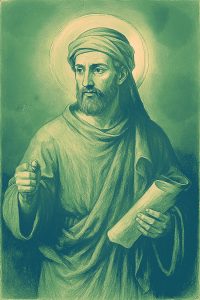
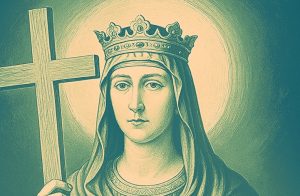
Saint Helena
(c.246-c.330) — Flavia Julia Helena was born to a lower social class, worked as a stable maid according to Saint Anselm, married co-regent Constantius, and gave birth to their son Constantine. Constantius put Helena aside for a more politically advantageous marriage as he ascended in power and eventually became Emperor. Helena never remarried and lived in obscurity until Constantius died and her son became Emperor, shortly after which she converted to Christianity. Saint Helena made a pilgrimage to the Holy Land when nearly 80 years old, according to bishop and historian Eusebius of Caesarea, to restore Christian landmarks. During that time, she found the True Cross.
Who in recovery has ever felt cast aside because they were “less than”? We’ve even done it to ourselves. But in recovery, we embrace our powerlessness. It’s up to Him to restore sanity.
“I know indeed how to live in humble circumstances; I know also how to live with abundance. In every circumstance and in all things I have learned the secret of being well fed and of going hungry, of living in abundance and of being in need. I have the strength for everything through him who empowers me” (Phillipians 4:12-13).
Reflection by Brad Farmer
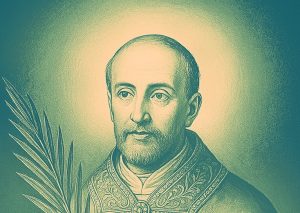
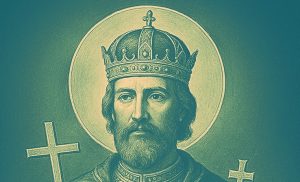
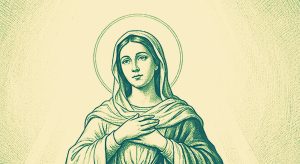
Other Saints
Discuss
Share your thoughts and connect with others on this journey.
Marene shares about how hearing the truth in recovery meetings has inspired her to be more humble. Do you relate? How has recovery made you more humble and willing to speak the truth before others?
Log in to join the discussion.