
To finish today's module, find time to pray, read through the below reflections, complete the five daily habits, attend a recovery meeting, and share what's on your heart and mind on today's discussion board.

PRAY
Serenity Prayer
God grant me the serenity to accept the things I cannot change the courage to change the things I can and the wisdom to know the difference.
Living one day at a time, enjoying one moment at a time, accepting hardship as the pathway to peace.
Taking, as Jesus did, this sinful world as it is, not as I would have it.
Trusting that You will make all things right, if I surrender to Your will.
That I may be reasonably happy in this life, and supremely happy with You forever in the next. Amen.
Third Step Prayer
God, I offer myself to Thee – to build with me and to do with me as Thou wilt.
Relieve me of the bondage of self, that I may better do Thy will.
Take away my difficulties, that victory over them may bear witness to those I would help of Thy Power, Thy Love, and Thy Way of Life.
May I do Thy will always!
During this stretch of Ordinary Time, many of our first readings come from the prophet Ezekiel. Ezekiel is considered one of the Major Prophets due to the volume of his work. He came from the tribe of priests (Levi) and began experiencing visions in his thirtieth year while living in exile under the Babylonians. Ezekiel is tasked with warning the Israelites of the dangers of distancing themselves from God during the trial of their exile, assuring them that God is faithful to His people. He often uses imagery and metaphors to relay his visions and messages.
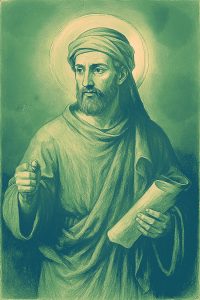
Today’s first reading describes a kind of “commissioning” of Ezekiel by God. Using the imagery of eating a written scroll, Ezekiel is infused with a message from the Lord and instructed to proclaim it: “But you, son of man, hear me when I speak to you and do not rebel like this rebellious house” (Ezekiel 2:8).
Most of us would likely suffer some kind of gag reflex if forced to eat a scroll but Ezekiel describes it as “sweet as honey in [his] mouth” (Ezekiel 2:8). Not long after reading these words, we read the beautiful refrain from today’s Responsorial Psalm: “How sweet to my taste is your promise.” The psalm describes rejoicing in the ways of His decrees, for His law is more precious than gold and silver. For many of us who have struggled with addiction, compulsions, and unhealthy attachments, rejoicing was likely not a typical reaction to rules, laws, and directives! We likely chafed at any perceived threat to our personal freedoms.
The Gospel reading from Matthew gives us a different lens through which to view rules and commandments. Jesus calls a young child over and reminds us that we are to become like little children to enter the Kingdom of Heaven. If you’ve ever been responsible for a child, you understand how vulnerable they are to all kinds of threats to their safety and welfare. We have to instruct them in countless ways: look both ways before crossing a street, never play with matches, don’t get into a car with a stranger, wash your hands and brush your teeth, and so on. As adult caregivers, we pass along these rules because it is in the child’s best interest. So it is with us in comparison to God and the spiritual life. It is precisely the humility of being willing to be parented that Jesus asks of us. As He says, “Whoever humbles himself like this child is the greatest in the kingdom of heaven” (Matthew 18:4). By accepting the Lord’s guidance and rules with the humility and innocence of a child, we come to experience freedom from our addictions, compulsions, and unhealthy attachments and rejoice in the ways of His decrees.
Reflection Questions
What rules, restrictions, and commandments did you initially balk at? How did you eventually come to see the wisdom in them?
Do you trust that God has your best interest at heart, even in the midst of your greatest trials? What can you do today to embrace a more child-like trust in God’s love and care for you?
Daily Mass Readings
First Reading: Ezekiel 2:8-3:4 Responsorial Psalm: Psalm 119:14, 24, 72, 103, 111, 131 Gospel: Matthew 18:1-5, 10, 12-14
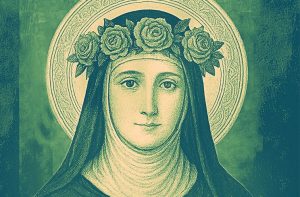
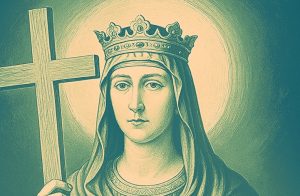
(1194-1253) — Clare was born to Italian nobility; her dad died when she was young, and she showed a love of the Blessed Sacrament from an early age. She heard Saint Francis preach during Lent when she was 18 and confided in him that she wanted to consecrate her life to God. Clare founded the Order of Poor Ladies, or Poor Clares, at 22, an order much like the Franciscan brothers that embrace poverty, depend on alms, and serve the poor. Saint Clare was known to be a charming, optimistic mystic, and many noble women were drawn to her.
“Clare and her sisters had hearts as big as the world: as contemplatives, they interceded for the whole of humanity. Those souls that were sensitive to the daily problems of each person were able to take all difficulties upon themselves; there was no concern, suffering, anguish or discouragement of others which did not find an echo in the hearts of these prayerful women” (Pope Saint John Paul II on August 11, 1993, 800th birthday of Saint Clare). How strong is your Step 11?
“We become what we love and who we love shapes what we become” (Saint Clare of Assisi).
Reflection by Brad Farmer
Other Saints
Saint Lawrence, Deacon and Martyr
August 10, 2025
Saint Teresa Benedicta of the Cross (Edith Stein), Virgin and Martyr
August 9, 2025
Saint Dominic de Guzman
August 8, 2025
Saint Cajetan, Priest
August 7, 2025
The Transfiguration of the Lord
August 6, 2025
Saint Oswald
August 5, 2025
Saint John Vianney, Priest
August 4, 2025
Saint Marcius (Martino) of Monte Cassino
August 3, 2025
Saint Peter Julian Eymard, Priest
August 2, 2025
ACT
Practice the five daily habits:
Start your day with prayer
Attend a recovery meeting (click here to find a meeting)
Connect with people in recovery outside of meetings
Read some recovery literature and Scripture
Give thanks to God at the end of the day
Discuss
Share your thoughts and connect with others on this journey.
No comments yet. Be the first to share!