
Day 48
To finish today's module, find time to pray, read through the below reflections, complete the five daily habits, attend a recovery meeting, and share what's on your heart and mind on today's discussion board.

PRAY
Serenity Prayer
God grant me the serenity
to accept the things I cannot change
the courage to change the things I can
and the wisdom to know the difference.
Living one day at a time,
enjoying one moment at a time,
accepting hardship as the pathway to peace.
Taking, as Jesus did,
this sinful world as it is,
not as I would have it.
Trusting that You will make all things right,
if I surrender to Your will.
That I may be reasonably happy in this life,
and supremely happy with You forever
in the next. Amen.
Third Step Prayer
God, I offer myself to Thee – to build with me and to do with me as Thou wilt.
Relieve me of the bondage of self, that I may better do Thy will.
Take away my difficulties, that victory over them may bear witness to those I would help of Thy Power, Thy Love, and Thy Way of Life.
May I do Thy will always!
Discover more prayers to strengthen your recovery and faith.

REFLECT
The Solemnity of the Most Holy Body and Blood of Christ
The journey of recovery invites us into a new way of living rooted in both spiritual principles and a real relationship with God. The Twelve Steps guide us toward honesty, surrender, and service, while the sacraments of the Church offer grace, healing, and nourishment. Together, they remind us that recovery is not something we achieve once, but something we live each day.
This Sunday, the Church celebrates the Solemnity of the Most Holy Body and Blood of Christ. In the Gospel, Jesus speaks words that are both challenging and deeply consoling (John 6:51-58): “Whoever eats my flesh and drinks my blood remains in me and I in him.” This is not only symbolic language. It is an invitation into communion and a real participation in the life of Christ.
For many of us in recovery, we know what it is like to seek satisfaction in things that ultimately left us empty. We turned to substances, behaviors, or unhealthy attachments hoping to find relief, comfort, or escape. For a time, those things may have seemed to work, but they never satisfied the deeper hunger within us.
The Eucharist speaks directly to that hunger. Jesus offers Himself not as a temporary solution, but as true nourishment. He meets us in a tangible way. In receiving the Body and Blood of Christ, we are reminded that we do not have to fill ourselves with what harms us. We are invited to receive what truly gives life.
This understanding often develops over time. In early recovery, we may feel restless, distracted, or disconnected. We may approach the Eucharist without recognizing its full significance. As we grow in awareness and willingness, something begins to change. We begin to recognize that God is not distant. He is present and available. He is offering Himself to us.
The practice of the Twelve Steps supports this ongoing relationship. Step Ten invites us to continue taking personal inventory and to promptly admit when we are wrong. This is a daily return to truth. In a similar way, the Eucharist invites us into a continual return to communion with God. We do not receive once and move on. We return again and again, allowing grace to shape us.
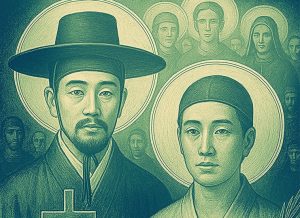
Saint Mark Ji Tianxiang offers a powerful witness. He struggled with opium addiction for many years and was denied access to the sacraments because he could not overcome it. Even so, he continued to attend Mass faithfully and remained devoted to Christ. In the end, he died a martyr, proclaiming his faith. His story reminds us that perseverance matters, even when our progress feels incomplete. God sees the heart and honors the desire to remain close to Him.
Recovery teaches us something similar. Progress is often imperfect. We may stumble, struggle, or feel discouraged. What matters is our willingness to return to meetings, to prayer, to honesty, and to God. The Eucharist becomes a place where we bring our whole selves, including our gratitude, our struggles, and our need for grace.
As we receive Christ, we are also united as one body. Just as we hear in recovery that this is a “we” program, the Eucharist reminds us that we are part of something larger than ourselves. We are connected to one another through Christ.
The Solemnity of the Body and Blood of Christ reminds us that recovery is not sustained by willpower alone. We need spiritual nourishment. We need grace. We need a source of life greater than ourselves. In the Eucharist, we are given that source.
As we continue this journey, we are invited to approach the altar with humility and openness. Christ is present and at work. He offers Himself freely, and in receiving Him, we are strengthened to live differently, one day at a time.
Reflection Questions
- When have you noticed yourself seeking satisfaction in things that ultimately left you empty?
- How has your understanding or experience of the Eucharist changed throughout your recovery journey?
- What helps you remain open to receiving spiritual nourishment and grace on a daily basis?
Sunday Mass Readings
First Reading: Deuteronomy 8:2-3, 14b-16a
Responsorial Psalm: Psalm 147:12-13, 14-15, 19-20
Second Reading: 1 Corinthians 10:16-17
Gospel: John 6:51-58
Download printable meeting reflections:
General Recovery | Recuperación General
Family & Friends Recovery | Recuperación para Familiares
Lust Addiction Recovery | Recuperación de Adicción Sexual
ACDH Recovery | Recuperación HAHD
Download virtual meeting reflections:
General Recovery | Recuperación General
Family & Friends Recovery | Recuperación para Familiares
Lust Addiction Recovery | Recuperación de Adicción Sexual
ACDH Recovery | Recuperación HAHD
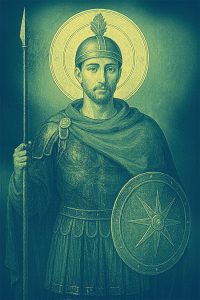
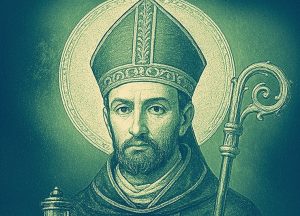
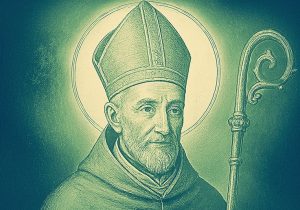
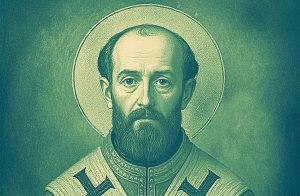
Saint Anthony Mary Gianelli, Bishop
(1789-1846) — Saint Anthony Mary Gianelli was born to a poor farming family in Italy. The owner of the farm paid for his seminary, and he received a special dispensation to be ordained at a young age, partly because he was such an excellent student. He founded several brief-lived orders and one that still serves today, called the Daughters of Our Lady of the Garden. Saint Anthony became the bishop of Bobbio, Italy, and constantly visited the parishes in his care.
Saint Anthony Mary Gianelli started his vocation young and remained active in service throughout his 57 years of life. He may not have the dramatic stories of some saints’ lives, but he lived life with heroic virtue. That’s what it means to be canonized a saint. In Steps 4-7, we boldly examine our lives, in Steps 8-9, we make right our wrongs, and in Steps 10-12, we continue to grow in virtue. How can the Twelve Steps help you live your vocation of being a saint?
“Time is short. While we have it, let us do good” (Saint Anthony Mary Gianelli).
Reflection by Brad Farmer
Other Saints
ACT
- Practice the five daily habits:
- Start your day with prayer
- Attend a recovery meeting (click here to find a meeting)
- Connect with people in recovery outside of meetings
- Read some recovery literature and Scripture
- Give thanks to God at the end of the day
Discuss
Share your thoughts and connect with others on this journey.
Log in to join the discussion.


No comments yet. Be the first to share!