
Login

Day 45

The Pathway to Recovery

Module 45 of 90

Day 45

To finish today's module, listen to the day's recording, complete the highlighted prayers, reflections, and activities, and share what's on your heart and mind on today's discussion board.

If the audio player above isn't loading, tap here to listen →

PRAY

Serenity Prayer

God grant me the serenity
to accept the things I cannot change
the courage to change the things I can
and the wisdom to know the difference.

Living one day at a time,
enjoying one moment at a time,
accepting hardship as the pathway to peace.

Taking, as Jesus did,
this sinful world as it is,
not as I would have it.

Trusting that You will make all things right,
if I surrender to Your will.

That I may be reasonably happy in this life,
and supremely happy with You forever
in the next. Amen.

Third Step Prayer

God, I offer myself to Thee – to build with me and to do with me as Thou wilt.
Relieve me of the bondage of self, that I may better do Thy will.
Take away my difficulties, that victory over them may bear witness to those I would help of Thy Power, Thy Love, and Thy Way of Life.
May I do Thy will always!

Discover more prayers to strengthen your recovery and faith.

REFLECT

Good evening, Friend
September 13
Daily Reflection
Saint of the Day
Daily Reflection
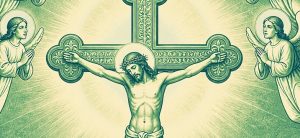
Twenty-fourth Sunday in Ordinary Time
Saint of the Day
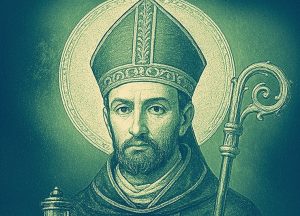
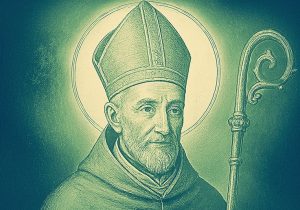
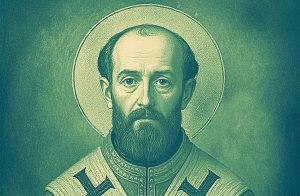
Saint John Chrysostom, Bishop and Doctor of the Church

Twenty-fourth Sunday in Ordinary Time

Resentment has a way of keeping old injuries remarkably fresh. A conversation that lasted five minutes can occupy our thoughts for five years. We replay what someone said, imagine what we should have said in return, and wait for an apology that may never come. The original offense happened in the past, but resentment gives it permission to keep taking something from us today.

The first reading names this danger: “Wrath and anger are hateful things, yet the sinner hugs them tight” (Sirach 27:30). That image is uncomfortable because it is true. We can hold onto anger because it feels justified, protective, or even powerful. Yet the tighter we cling to resentment, the more it begins to shape our thoughts, relationships, prayer, and recovery.

Peter raises the question in Sunday’s gospel: “Lord, if my brother sins against me, how often must I forgive him? As many as seven times?” Jesus answers, “I say to you, not seven times but seventy-seven times” (Matthew 18:21–22). Jesus is not giving Peter a larger number to count. He is describing a life shaped by mercy.

He then tells the parable of a servant forgiven an enormous debt who refuses to forgive a much smaller debt owed to him. The contrast is meant to expose something in us. Many of us know what it is to stand before God carrying a debt we could not repay. We have received mercy through confession, recovery, second chances, repaired relationships, and people who continued loving us when they had reason to walk away. The question is whether the mercy we have received is changing the way we hold the debts of others.

Forgiveness does not mean pretending the wound did not matter. It does not excuse harmful behavior, erase consequences, restore trust immediately, or require us to remain in an unsafe relationship. Reconciliation involves two people and often requires repentance, honesty, and repair. Forgiveness can begin within us even when the other person never changes. It is the decision to release our claim to vengeance and place the debt in God’s hands.

This is deeply connected to recovery. Resentment can become a doorway back into old patterns. We justify isolation, self-pity, anger, or acting out because someone else hurt us. Inventory helps us name these resentments honestly. Prayer helps us surrender them. Amends teach us to examine our own side of the street without denying what another person has done. Over time, we discover that forgiveness is not primarily a reward we give someone who deserves it. It is part of the freedom Christ is offering us.

Saint Paul reminds us in the second reading, “None of us lives for oneself, and no one dies for oneself” (Romans 14:7). What we carry affects other people. Unresolved anger can spill into relationships that had nothing to do with the original wound. Forgiveness makes room for us to become more available to God, to others, and to the life in front of us.

Some resentments release quickly while others do not. We may need to surrender the same injury to God many times before our emotions follow our decision. Perhaps that is part of what Jesus means by forgiving seventy-seven times. We keep releasing the debt, not because the wound was insignificant, but because we have already been shown immeasurable mercy.

Forgiveness is not weakness, and it does not require forgetting. It is an act of trust. We place justice in God’s hands and refuse to let resentment continue directing our lives. Christ does not ask us to deny what happened. He invites us to carry the truth without being chained to it, and to receive a freedom greater than our anger.


Reflection Questions

  • What resentment are you still “hugging tight,” and what do you believe holding onto it is doing for you?
  • Where might you be confusing forgiveness with excusing harm, restoring trust, or removing a necessary boundary?
  • What would it look like to place a particular debt in God’s hands while honestly attending to your own part in the situation?


Sunday Mass Readings

First Reading: Sirach 27:30—28:7
Responsorial Psalm: Psalm 103:1-2, 3-4, 9-10, 11-12
Second Reading: Romans 14:7-9
Gospel: Matthew 18:21-35


Download printable meeting reflections:
General Recovery  |  Recuperación General
Family & Friends Recovery  |  Recuperación para Familiares
Lust Addiction Recovery  |  Recuperación de Adicción Sexual
ACDH Recovery  |  Recuperación HAHD

Download virtual meeting reflections:
General Recovery  |  Recuperación General
Family & Friends Recovery  |  Recuperación para Familiares
Lust Addiction Recovery  |  Recuperación de Adicción Sexual
ACDH Recovery  |  Recuperación HAHD

View Full Reflections Calendar

Saint John Chrysostom, Bishop and Doctor of the Church

Audio Reflection

(c.347-407) — John, the most prominent Greek Father of the Church, preached sermons still considered some of the best in history, earning him the title of “Doctor” as well as “Chrysostom,” which means “golden-mouth.” Born in Antioch, John lived as a hermit and then priest for several years. He was made bishop of Constantinople, a move that involved him in imperial politics. The empress, Eudoxia, and some nobles and bishops did not appreciate his calls to reform their lives, and he died in exile.

Saint John is incredibly quotable. Still, all of his best quotes point to what is in Scripture. In recovery, we strive to share the message, not our mess.

“If the Lord should give you power to raise the dead, He would give much less than He does when he bestows suffering. By miracles you would make yourself debtor to Him, while by suffering He may become debtor to you. And even if sufferings had no other reward than being able to bear something for that God who loves you, is not this a great reward and a sufficient remuneration? Whoever loves, understands what I say” (Saint John Chrysostom).

Reflection by Brad Farmer

Other Saints

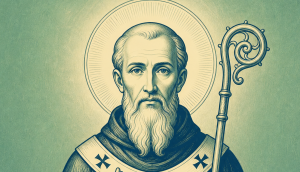
Saint Ailbe
Saint Ailbe
September 12, 2025
Saint Paphnutius of Thebes
September 11, 2025
Saint Nicholas of Tolentino
September 10, 2025
Saint John Henry Newman, Cardinal and Doctor of the Church
September 9, 2025
Saint Peter Claver, Priest
September 9, 2025
Saint Thomas of Villanova
September 8, 2025
Saint Clodoald (Cloud)
September 7, 2025
Saint Magnus of Fussen
September 6, 2025
Saint Teresa of Calcutta
September 5, 2025

ACT

Explore

Dive deeper with these additional resources to support your journey.
Webinar
WebinarHearing the Voice of GodView
Podcast
PodcastThe Power of Prayer in RecoveryView
Article
ArticleAdvice for Improving Our Conscious Contact with God in Step 11View
Article
ArticleThe 11th Step & a Catholic Approach to Meditation & Mindfulness: Part OneView
Article
ArticleLearning to Trust in God Through PrayerView
Article
ArticleHow the Lord’s Prayer Reveals the Key to God’s MercyView
Article
ArticleThe Power of “The Serenity Prayer”View
Article
ArticlePrayer: How Do You Pray?View

Discuss

Share your thoughts and connect with others on this journey.

No comments yet. Be the first to share!

Looking for support?Connect with others who understand your journey.
Find a Meeting