

Ash Wednesday
To complete today's challenge, find time to prayerfully read through the reflections below, attend a recovery meeting, and share what's on your heart and mind on today's discussion board.
 REFLECT
After reading today's reflections, make sure to listen to Pete S.'s personal reflection.

Thirty-third Sunday in Ordinary Time
The story we once wanted to hide can become one of the gifts God uses most. Early in recovery, the past may look like nothing more than loss and regret. We would prefer to close the door and move on. Over time, however, God begins showing us that the experience we never would have chosen can help another person believe that freedom is possible.
Sunday’s gospel asks what we are doing with the life and grace entrusted to us (Matthew 25:14–30). Jesus tells of a man who leaves three servants responsible for different amounts of money. Two put what they receive to work. The third buries his portion and later explains, “Out of fear I went off and buried your talent in the ground.” His failure is not that he received less than the others. Fear kept him from using what had been placed in his hands.
Shame can lead us to do something similar. We may believe our past disqualifies us from being useful. We tell ourselves that we do not know enough, have not been sober long enough, or still carry too many weaknesses to help anyone. Those concerns can sound humble, but they may also become reasons to keep the gift buried.
Step Twelve offers another direction. Having had a spiritual awakening as the result of the Steps, we try to carry the message to others and practice these principles in all our affairs. The freedom we receive is not private property. God entrusts it to us so that it can become hope for someone else.
Carrying the message does not require a public role or an impressive story. A person can become useful by sharing honestly in a meeting when silence or secrecy might feel safer. Sometimes service means listening carefully to a newcomer and remembering how confusing the first weeks of recovery once felt. What strengthens another person may look ordinary to us, but God can use it far beyond what we see.
Service also needs humility and proportion. The faithful servants work with what they have been given; they are not asked to manage the entire estate. We do not have to do everything, rescue everyone, or neglect our own recovery in order to be helpful. Step Twelve grows out of the previous Steps. We continue taking inventory, praying, making amends where needed, and staying connected so that our service comes from spiritual health rather than the need to be needed.
The second reading tells us, “Let us not sleep as the rest do, but let us stay alert and sober” (1 Thessalonians 5:6). Spiritual readiness is not passive waiting. We remain awake by staying engaged with the life God has given us. Long-term recovery becomes more than avoiding a return to addiction. It becomes a life of responsibility, gratitude, and service.
The master tells the faithful servants, “Come, share your master’s joy” (Matthew 25:21). Their joy comes not from comparison but from faithfulness. Each responds to what was entrusted to them, and recovery asks the same of us. We are not responsible for producing someone else’s fruit or carrying someone else’s message. We are asked to become faithful with our own experience.
God does not waste the darkness from which He has brought us. The freedom, wisdom, and hope we receive in recovery are meant to move outward. When fear no longer keeps our story buried, even painful parts of the past can become instruments of grace. Step Twelve invites us to carry the message, practice the principles, and discover the joy of a life that is no longer lived only for ourselves.
Reflection Questions
- What fear or shame has made you hesitant to share your experience or become useful to someone else?
- How has helping another person strengthened your own recovery or deepened your gratitude for what God has done?
- What concrete act of service might help you put the freedom and hope entrusted to you to work this week?
Sunday Mass Readings
First Reading: Proverbs 31:10-13, 19-20, 30-31
Responsorial Psalm: Psalm 128:1-2, 3, 4-5
Second Reading: 1 Thessalonians 5:1-6
Gospel: Matthew 25:14-30 or Matthew 25:14-15, 19-21
Reflection by Scott W.
Saint Albert the Great, Bishop and Doctor of the Church
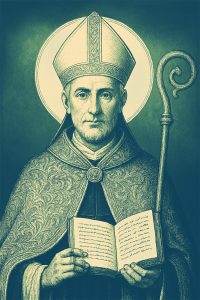 (1206-1280) — The “Universal Doctor” and patron saint of scientists was born to a military nobleman in Germany. He eventually joined the newly formed Order of Preachers (Dominicans). He was a priest, an influential preacher, teacher, philosopher, scientist, and theologian, and he eventually became bishop of Regensburg, Germany. Among many other academic achievements, his commentary on the works of Aristotle made that school of philosophy far more accessible than ever before. He taught in Paris and Cologne.
When the Dominican friars in Cologne called Saint Thomas Aquinas “the dumb ox,” Albert prophesied that the “lowing of this dumb ox will one day resound throughout the world.” Many people in recovery have been labeled by someone else or by themselves. The saint sees past the label to the person. How have you overcome labels in your recovery?
“Govern my heart, O Lord, lest it drift into useless and disordered thoughts. Do not permit me to become excessively preoccupied with anything at all, even matters and concerns that are useful and good in themselves. Temper the affections of my soul so that I may neither love nor hate anything in a way that exceeds due proportions. Let me neither rejoice nor be saddened beyond the measure that is fitting and rational” (Saint Albert the Great).
Reflection by Brad Farmer
Other Saints


Discuss
Share your thoughts and connect with others on this journey.
Log in to join the discussion.
Thank you very much for these deep and thought-provoking reflections. As a homeschooling family, I used to take my kids to the Smithsonian Gallery of Art, to appreciate and ponder on the breathtaking and faith-filled artwork of Fra Angelico. I never truly researched more information about him beyond admiring his paintings. Now that I know, I will surely share them with my family. Like Fra Angelico, my family and I will seek purity in our lives during this Lenten season, especially in our thoughts, words, and actions. As a family member of a lust addict, I will endeavor to take the steps to increase purity and avoid the near occasions of sin by reducing our usage of technology and entertainment. I look forward to journey on this Lenten Recovery Challenge. May God continue to bless the CIR+ ministry and everyone else in the challenge. And may your Lenten season be a fruitful, faith-filled, and transformative one.
I think about secrets in our family growing up...so many shame filled secrets. My dad use to go downstairs late at night and eat chips from a large tin container. Then mom would wake up and go downstairs and yell at him shaming him because he was so overweight. My mom's secret was sneaking wine in a red solo cup through the day which we thought for years was just juice. My secrets were always involving food. Someone would ask, "who ate all the ice cream or whip cream or etc. ," I'm here just starting my recovery from OE to health because my girls are now asking, "who ate my chips or ice cream or etc...". I need to bring this secret into the light and get recovery to health! Thank you for letting me share.