
Login

Day 21

The Pathway to Recovery

Module 21 of 90

Day 21

To finish today's module, find time to pray, read through the below reflections, complete the five daily habits, attend a recovery meeting, and share what's on your heart and mind on today's discussion board.

PRAY

Serenity Prayer

God grant me the serenity
to accept the things I cannot change
the courage to change the things I can
and the wisdom to know the difference.

Living one day at a time,
enjoying one moment at a time,
accepting hardship as the pathway to peace.

Taking, as Jesus did,
this sinful world as it is,
not as I would have it.

Trusting that You will make all things right,
if I surrender to Your will.

That I may be reasonably happy in this life,
and supremely happy with You forever
in the next. Amen.

Third Step Prayer

God, I offer myself to Thee – to build with me and to do with me as Thou wilt.
Relieve me of the bondage of self, that I may better do Thy will.
Take away my difficulties, that victory over them may bear witness to those I would help of Thy Power, Thy Love, and Thy Way of Life.
May I do Thy will always!

Discover more prayers to strengthen your recovery and faith.

REFLECT

Good morning, Friend
June 28
Daily Reflection
Saint of the Day
Daily Reflection
Thirteenth Sunday in Ordinary Time
Saint of the Day
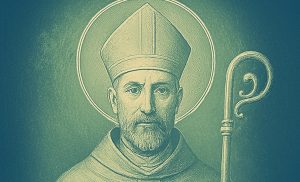
Saint Irenaeus of Lyon, Bishop, Martyr, and Doctor of the Church

Thirteenth Sunday in Ordinary Time

There comes a point in recovery when we realize that change will require more than good intentions. We may have experienced moments of clarity or even a strong desire to live differently, but something deeper is needed. Recovery asks us not only to see the problem, but to surrender our way of living and begin again on new terms.

Saint Paul offers a powerful image for this transformation in this Sunday’s second reading (Romans 6:3-11):

Are you unaware that we who were baptized into Christ Jesus
were baptized into his death?
We were indeed buried with him through baptism into death,
so that, just as Christ was raised from the dead
by the glory of the Father,
we too might live in newness of life. 

Baptism is not simply something that happened in the past. It represents an ongoing invitation to let go of the old way of life and step into something new.

In recovery, this movement closely mirrors Step One. We come to admit that we are powerless over our addiction, compulsion, or unhealthy attachment, and that our lives have become unmanageable. This admission is not just about behavior. It reaches deeper into how we have tried to control, manage, and direct our lives according to our own will.

For many of us, this realization does not come easily. We may have spent years trying to convince ourselves that things were under control or that we could fix the problem on our own. Even when the consequences became clear, we may have continued to rely on our own thinking. Step One interrupts that pattern. It brings us to a place of honesty where we can no longer deny reality.

This moment can feel like a kind of loss. Letting go of control can feel uncertain and uncomfortable. Yet this is where new life begins. When we stop trying to manage everything ourselves, we create space for God to act. What once felt like defeat becomes the starting point of transformation.

Saint Paul continues, “We know that Christ, raised from the dead, dies no more; death no longer has power over him.” This is the hope at the center of recovery. The patterns that once dominated our lives do not have the final word. Through Christ, something new is possible.

The Gospel also speaks to this turning point in a different way (Matthew 10:37-42). Jesus tells His disciples that following Him requires placing Him above everything else. This is not a call to reject others, but an invitation to reorder our priorities. As we pursue a new way of life, this often means recognizing that we cannot hold on to both our old way of living and our desire for freedom. Something must change.

In practical terms, this change unfolds in simple but meaningful ways. We begin by telling the truth about our situation. We reach out to others instead of isolating. We become willing to follow guidance rather than relying only on our own understanding. These actions may seem small, but they represent a fundamental shift.

This process also invites humility. We begin to accept that we do not have all the answers and that we need help. This can be challenging, especially if we are used to relying on ourselves. Yet it is through this humility that we begin to grow.

Recovery is not about getting everything right. It is about moving in a new direction. We may still struggle, but we no longer have to stay stuck. Each day offers another opportunity to practice surrender and to take a step forward.

As we continue this journey, we are reminded that new life is not something we create on our own. It is something we receive. When we are willing to let go of the old way and trust God with what comes next, we begin to experience the freedom that once felt out of reach.


Reflection Questions

  • When have you experienced the kind of surrender described in Step One, and what made it difficult or possible in that moment?
  • How do you recognize the “old way of living” showing up in your thoughts, decisions, or behaviors today?
  • What does it look like for you, in a practical way, to live in the “newness of life” that God is offering right now?


Sunday Mass Readings

First Reading: 2 Kings 4:8-11, 14-16a
Responsorial Psalm: Psalm 89:2-3, 16-17, 18-19
Second Reading: Romans 6:3-4, 8-11
Gospel: Matthew 10:37-42


Download printable meeting reflections:
General Recovery  |  Recuperación General
Family & Friends Recovery  |  Recuperación para Familiares
Lust Addiction Recovery  |  Recuperación de Adicción Sexual
ACDH Recovery  |  Recuperación HAHD

Download virtual meeting reflections:
General Recovery  |  Recuperación General
Family & Friends Recovery  |  Recuperación para Familiares
Lust Addiction Recovery  |  Recuperación de Adicción Sexual
ACDH Recovery  |  Recuperación HAHD

View Full Reflections Calendar

Saint Irenaeus of Lyon, Bishop, Martyr, and Doctor of the Church

Audio Reflection

(c.130-202) — Priest, and then bishop in Lyon (now France), Saint Irenaeus was a disciple of Saint Polycarp, who was a disciple of Saint John the Apostle. He was a Greek from Asia Minor during the reign of Roman Emperor Marcus Aurelius, who persecuted the Christians. Irenaeus was an excellent theologian and writer, emphasising the unity of the Old and New Testaments and opposing Gnosticism. One of the first great ecclesiastical writers and a man of heroic virtue, Saint Irenaeus is also called a Doctor of the Church (formally declared in 2022) and a Father of the Church.

Irenaeus was a disciple of a disciple of an Apostle. We are grateful for our predecessors in our Catholic faith and recovery. We are not looking to invent a new religion or craft our own recovery program. We seek the truth, then follow. Trying to invent either on our own has led many to relapse or worse, utter disaster.

“For you did not make God, but God you. If, then, you are God’s workmanship, await the hand of your Maker which creates everything in due time” (Saint Irenaeus, Against Heresies, IV, 39, 2).

Other Saints

Saint Cyril of Alexandria, Bishop and Doctor of the Church
June 27, 2025
Saint Josemaría Escrivá de Balaguer
June 26, 2025
Saint William of Vercelli
June 25, 2025
Nativity of Saint John the Baptist
June 24, 2025
Saint Joseph Cafasso
June 23, 2025
Saint John Fisher, Bishop and Martyr and Saint Thomas More, Martyr
June 22, 2025
Saint Aloysius Gonzaga
June 21, 2025
Blessed Margareta Ebner
June 20, 2025
Venerable Matt Talbot
June 19, 2025

ACT

  • Practice the five daily habits:
    1. Start your day with prayer
    2. Attend a recovery meeting (click here to find a meeting)
    3. Connect with people in recovery outside of meetings
    4. Read some recovery literature and Scripture
    5. Give thanks to God at the end of the day

Discuss

Share your thoughts and connect with others on this journey.

Scott Bailey 2 months ago
Today’s reflection really hits home. I’ve known I needed help for a long time but refused to admit outwardly I had a problem. I was scared of what people would think. Afraid of how my friends would react. Ashamed. I finally accepted the fact that I could not do this on my own and reached out for help. It was like a huge weight had been lifted. The out pouring of love and support has been huge.
Looking for support?Connect with others who understand your journey.
Find a Meeting