God grant me the serenity to accept the things I cannot change the courage to change the things I can and the wisdom to know the difference.
Living one day at a time, enjoying one moment at a time, accepting hardship as the pathway to peace.
Taking, as Jesus did, this sinful world as it is, not as I would have it.
Trusting that You will make all things right, if I surrender to Your will.
That I may be reasonably happy in this life, and supremely happy with You forever in the next. Amen.
Third Step Prayer
God, I offer myself to Thee – to build with me and to do with me as Thou wilt.
Relieve me of the bondage of self, that I may better do Thy will.
Take away my difficulties, that victory over them may bear witness to those I would help of Thy Power, Thy Love, and Thy Way of Life.
May I do Thy will always!
The Solemnity of Our Lord Jesus Christ, King of the Universe
Saint of the Day
Saint Cecilia, Virgin and Martyr
The Solemnity of Our Lord Jesus Christ, King of the Universe
Christ the King sounds like a feast of power and majesty. Yet Sunday’s gospel introduces the King through people who are hungry, sick, imprisoned, and alone. Jesus tells us that the way we respond to them is the way we respond to Him. The final Sunday of the liturgical year asks not only whether we believe Christ is King, but whether we recognize Him when He comes without status, strength, or convenience.
In Sunday’s gospel, the Son of Man separates the nations as a shepherd separates sheep from goats (Matthew 25:31–46). Those welcomed into the kingdom are surprised when He says, “I was hungry and you gave me food, I was thirsty and you gave me drink.” They ask when they ever saw Him in such need. Jesus answers, “Whatever you did for one of the least brothers of mine, you did for me” (Matthew 25:35, 40).
The surprise is important. These acts of mercy were not performed to build a spiritual résumé. The righteous responded to the person in front of them and later discovered that Christ had been present all along. Recovery can restore this kind of attention. Addictions, compulsions, and unhealthy attachments narrow our world until nearly everything revolves around relief, fear, or self-protection. As grace opens our lives again, we become more capable of noticing someone else.
Before we serve, however, we remember that Christ first came looking for us. In the first reading, God says, “I myself will look after and tend my sheep” (Ezekiel 34:11). He seeks the lost and tends the injured. Many of us know what it is like to be found in a place of shame or confusion. Someone welcomed us into a meeting before we knew what to say or a sponsor stayed close when our own judgment could not be trusted. The care we receive becomes the pattern for the care we offer.
Step Ten helps keep us awake to this calling. Continuing to take personal inventory means examining more than our obvious wrongdoings. We can also ask where self-absorption has made us indifferent. Did we dismiss someone because their struggle seemed inconvenient? Did judgment keep us from listening? When we recognize that we have become cold or unavailable, Step Ten gives us a way to return quickly and repair what belongs to us.
This inventory can also reveal where we have reduced another person to a problem. Recovery gives us a shared language, but it should not make us quick to label or dismiss. The person who tests our patience still bears the image of God, and our response can either protect or reject that dignity.
Mercy does not mean rescuing everyone or removing consequences that may lead someone toward change. We are not the Savior in this story. Christ is the Shepherd and King. Our task is to respond faithfully to the need He places before us while respecting another person’s dignity and responsibility. Healthy service offers presence without taking over.
This kind of service also protects recovery from becoming a private project of self-improvement. The grace we receive is meant to move outward. A newcomer may need someone to remember their name the next time they return. A person returning after relapse may need an honest welcome rather than suspicion. These ordinary responses can become places where Christ makes Himself known.
Recovery is not complete when we simply stop an addictive or compulsive behavior. Grace restores our capacity to be present and become useful to others. Christ has met us in our weakness, and He continues meeting us in the needs of others. When we notice, respond, and make room for someone who is suffering, we are not merely performing a good deed but encountering our King.
Reflection Questions
Where has self-concern or judgment made it difficult for you to recognize Christ in someone who needed mercy?
When has another person’s compassion or steady presence helped you through a vulnerable season in recovery?
What concrete act of mercy or Step Ten repair is Christ placing before you now?
Sunday Mass Readings
First Reading: Ezekiel 34:11-12, 15-17 Responsorial Psalm: Psalm 23:1-2, 2-3, 5-6 Second Reading: 1 Corinthians 15:20-26, 28 Gospel: Matthew 25:31-46
(3rd century) — Cecilia was born to a prominent family in Rome and consecrated her virginity to God before being arranged to marry a pagan, Valerian of Trastevere. She told her betrothed that her purity was guarded by an angel, and that he could see the angel if he was baptized. Valerian was baptized, converted his brother, and the two men were martyred for the crime of burying dead Christians. Authorities encouraged Cecilia to renounce her faith, and when she would not, they tried suffocating her with toxic gas. She sang rather than suffocating, so they tried beheading, which didn’t work, either. The Roman soldiers finally left her, barely alive, to die on her own three days later. Cecilia’s tomb was opened in 1599, and her body was found to be incorrupt, miraculously defying the laws of natural decomposition.
Saints—and martyrs in particular—have no reservations about giving God their all. Working a solid program in recovery requires acknowledging those difficult situations that might tempt us back to our addiction or unhealthy attachment. Have you addressed your potential reservations? What is your plan to avoid relapse should they occur?
“Arise, soldiers of Christ, throw away the works of darkness and put on the armor of light” (Saint Cecilia).
Reflection by Brad Farmer
Other Saints
Presentation of the Blessed Virgin Mary
November 21, 2025
Blessed Maria Fortunata Viti
November 20, 2025
Saint Mechtilde of Helfta
November 19, 2025
Saint Rose Philippine Duchesne, Virgin
November 18, 2025
Saint Elizabeth of Hungary
November 17, 2025
Saint Gertrude the Great, Virgin
November 16, 2025
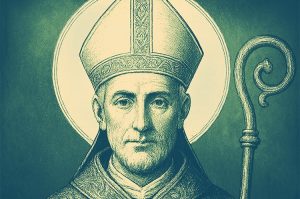
Saint Albert the Great, Bishop and Doctor of the Church
November 15, 2025
Saint Lawrence O’Toole
November 14, 2025
Saint Agostina Pietrantoni
November 13, 2025
ACT
Practice the five daily habits:
Start your day with prayer
Attend a recovery meeting (click here to find a meeting)
Connect with people in recovery outside of meetings
The optional session can be conducted over Zoom or the phone at a time most convenient for you. In the session, you can expect the following:
A friendly welcome to the Catholic in Recovery community
An overview of how to best experience CIR+’s many resources
An opportunity for us to get to know you as a special member of our community (the discussion will be completely confidential and you’re welcome to share as little or as much as you’re comfortable)
Explore
Dive deeper with these additional resources to support your journey.
I participate in the in-person and virtual meetings for family members of addicts. These meetings have been very beneficial. However, I would like to know if there are specific meetings for family members of lust addicts? My husband's sponsor highly encourages that I attend an SA meeting but I'd prefer to attend a Catholic-based meeting, if such exists. Thank you.
Rachelle Shands8 months ago
For myself I find it out of my comfort zone to attend meetings. Yes, I have used that as a reason to not seek 12 step help or even medical help. The podcast calls it denial and it was explained beautifully. Thank you.
Preston1 month ago
Staying connected with others is a difficult one for me. My childhood trauma has left me with these deep seeded fears of rejection and abandonment. So while I crave that connection with others and I feel how important it is for my recovery, I also feel as though I'm being a burden to someone if I'm the one always reaching out to them. I'm afraid that if I text them frequently then they'll get tired of me and cut me off. I'm afraid I'll say something embarrassing and get rejected. I'm afraid I'll open up and be vulnerable and it will get used against me, or spread to others. I gave in to these fears yesterday and didn't reach out to anyone and while I did manage to maintain my sobriety, I struggled all evening until I could finally fall asleep. A simple text exchange with a friend I feel could have helped shift my mind to something healthier.
Looking for support?Connect with others who understand your journey.



 PRAY
 REFLECT




 ACT