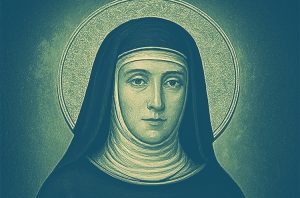
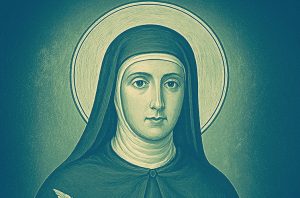
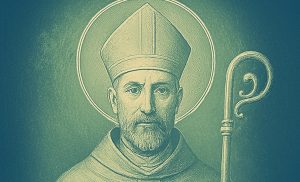
To complete today's challenge, find time to prayerfully read through the reflections below, attend a recovery meeting, and share what's on your heart and mind on today's discussion board.
REFLECT
Good evening, Friend
October 23
Daily Reflection
Saint of the Day
Daily Reflection
Friday of the Twenty-ninth Week in Ordinary Time
Saint of the Day
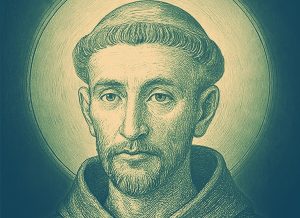
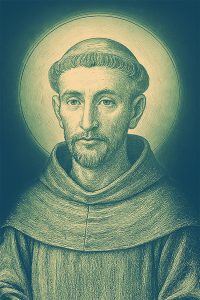
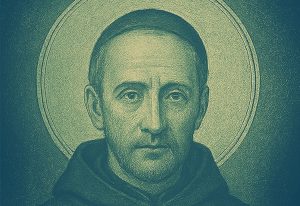
Saint John of Capistrano, Priest
Friday of the Twenty-ninth Week in Ordinary Time
“Brothers and sisters: I, a prisoner for the Lord, urge you to live in a manner worthy of the call you have received, with all humility and gentleness, with patience, bearing with one another through love, striving to preserve the unity of the spirit through the bond of peace; one Body and one Spirit, as you were also called to the one hope of your call; one Lord, one faith, one baptism; one God and Father of all, who is over all and through all and in all” (Ephesians 4:1-6).
Do you recognize the startling truth that you were “called” to conversion in recovery? God summoned you in order to heal you, restore your dignity, and form you in His love and mercy so that you in turn could bring His love and mercy to others. Recovery is never really about us at all. It is about God’s will and plan. We are asked only to cooperate with His mission to save souls, one soul at a time. As such, recovery is ultimately evangelical in nature, not a self-help program. And what we discover, if we answer the call of our Higher Power, if we surrender and trust in Christ Jesus, is that by His grace we gain power to throw off the shackles of our pride and attachments and joyfully become “prisoners for the Lord.” Therein lies our true freedom.
Conversion in recovery is carried forth in the practice of humility, gentleness, and patience with ourselves and others. These virtues counter the pride of the self-centered heart, the physical, emotional, and spiritual violence to self and others, and the reckless impulsivity so typical of life in addiction. In our self-obsessed narcissism, we cannot accept and bear to love righteously because we cannot accept and bear the truth about ourselves—our weakness, powerlessness, brokenness, and sinfulness. We must learn to see, forgive, and love ourselves as God sees, forgives, and loves us. This is how we are transformed in love.
The bond of peace is manifested to us in recovery with the gifts of sanity, sobriety, and serenity, given to us by the Holy Spirit if we invite Him into our souls. Recovery fellowship in the life of the Church teaches us that we are nothing special (what our pride rejects) and yet are nonetheless beloved (what God reveals in our humility). Therein comes the healthy integration of heart, soul, mind, and strength that enables us to love God and neighbor as one Body in one Spirit.
Christ Jesus is the source and summit of our lives, the very foundation and goal of our recovery, our everlasting mercy and strength. The sooner we embrace this truth, the sooner we become well. Our baptism confers upon us the indelible seal of an adopted child of God, and the program of recovery in union with the sacramental life of the Church “confirms,” as it were, our sacred adoption, thereby empowering us to give witness to the experience, strength, and hope that is within us (cf. 1 Peter 3:15).
There is nothing more important in the spiritual program of recovery than death to our self-will and union with God’s will. This is the “metanoia” of recovery, the fundamental realignment of our entire lives to the love of God and neighbor, and the affirmation that the “one God and Father of all” is the Lord of our lives and will satisfy our deepest desires for happiness, belonging, and love if we let Him—if we truly and passionately “let go and let God.”
Reflection Questions
How have you come to be “a prisoner for the Lord” in recovery? How have you embraced the virtues of humility, gentleness, and patience?
Consider how the program of recovery has prepared you to “to justify the hope that is in you” (1 Peter: 3:15b). What are some examples of how your recovery journey has “confirmed” your belovedness as an adopted child of God?
Daily Mass Readings
First Reading: Ephesians 4:1-6 Responsorial Psalm: Psalm 24:1-2, 3-4ab, 5-6 Gospel: Luke 12:54-59
(1386-1456) — The “Soldier Saint,” designated as patron saint of military chaplains by Pope Saint John Paul II, was the son of a knight in Capistrano, Italy. He became a lawyer in Naples, then the governor of Perugia, Italy. Just before war broke out with a neighbor of Perugia, John had gotten married but never consummated the marriage. He tried to broker peace, ended up a prisoner of war, and while in prison, was inspired by a dream of Saint Francis to become a Franciscan. After his release, John’s marriage was declared null, he became a Franciscan priest, and had Saint Bernardine of Siena as his mentor. At age 70, he preached a crusade against the Ottoman Turks after the fall of Constantinople and helped lead the soldiers to their initial victory before falling victim to the bubonic plague.
Saint John challenged people to live holy lives in order to be salt and light to the world around us (cf. Matthew 5:13-16). Steps 10-12 challenge us to put the principles gained in the previous Steps into action, to “practice these principles in all our affairs.” How is this done in your recovery?
“The Lord who made the beginning will take care of the finish!” (Saint John of Capistrano).
Reflection by Brad Farmer
Other Saints
Saint John Paul II, Pope
October 22, 2025
Saint Laura of Saint Catherine of Siena
October 21, 2025
Saint Maria Bertilla Boscardin
October 20, 2025
Saint Paul of the Cross, Priest
October 19, 2025
Saint Luke, Evangelist
October 18, 2025
Saint Ignatius of Antioch, Bishop and Martyr
October 17, 2025
Saint Margaret Mary Alocoque
October 16, 2025
Saint Teresa of Jesus, Virgin and Doctor of the Church
October 15, 2025
Saint Callistus I, Pope and Martyr
October 14, 2025
Discuss
Share your thoughts and connect with others on this journey.
Taking up my cross daily? Continuing with my recovery. Being codependent is my issue and brings me to CIR. Everyday I must deal with it and try my best with the help of Gods grace to live my life but according to Gods will and not my will. The cross of letting go and let God be in control. For a codependent person this is very hard to accomplish. Everyday I wake up being thankful that I am alive and willing to try and let go and let God be in control. Jesus I surrender myself to you, take care of everything and everyone. Jesus I trust in you, Jesus I trust in you, Jesus I trust in you. Please pray for me to carry this cross of codependency. I pray for all those in CIR. Amen.
2
Looking for support?Connect with others who understand your journey.

 REFLECT